

Fiber Optic · Design, Build, Operate

From the backbone to the living room socket

NETIS designs, builds, splices, tests and maintains fibre networks across Africa. Backbone and metro construction, FTTH and FTTx rollout, last mile connection, and a 24/7 NOC that watches the whole thing afterwards.
0 +
Kilometres of backbone and metro built
0 K+
Homes and businesses connected
0 K+
Splices delivered and tested
0 /7
NOC coverage, every day of the year
Our Positioning

One team from the pole to the port

A fibre network fails at its weakest joint. Survey quality drives design, design drives build, and build quality decides how often your teams go back out. Netis owns that whole chain, so nobody can point at anybody else.
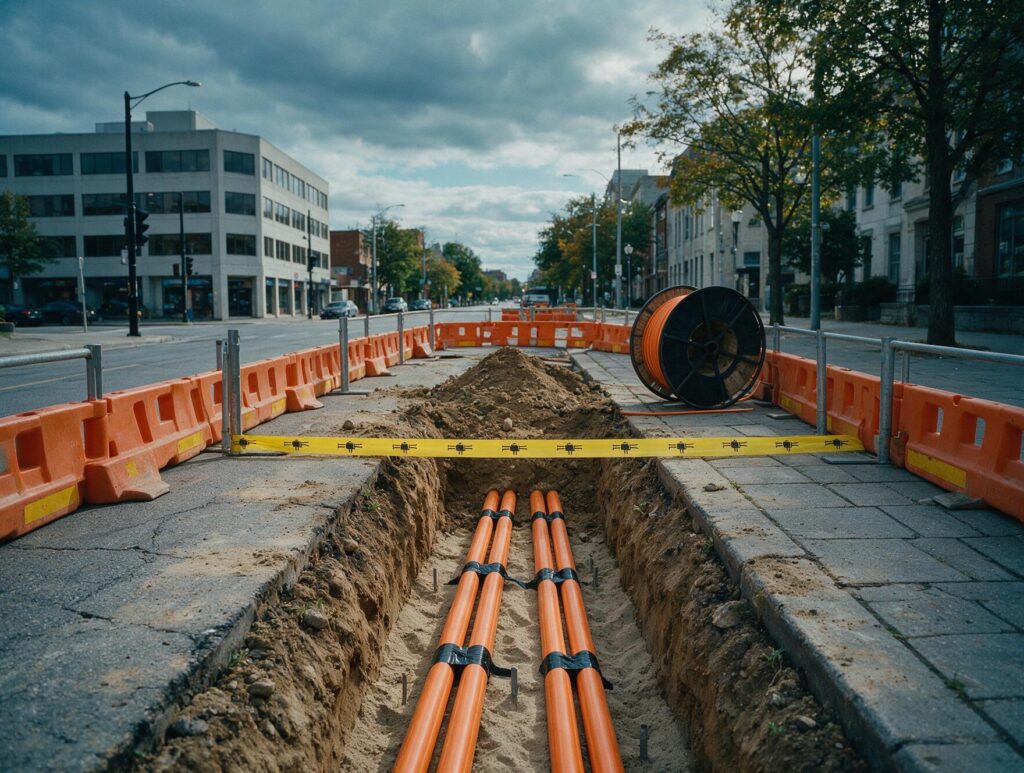
Underground fibre optic duct laid in an open trench
Design engineered in-house

Market qualification, pole survey and city vectorization feed the high and low level design produced by our own engineers, not handed to a third party.
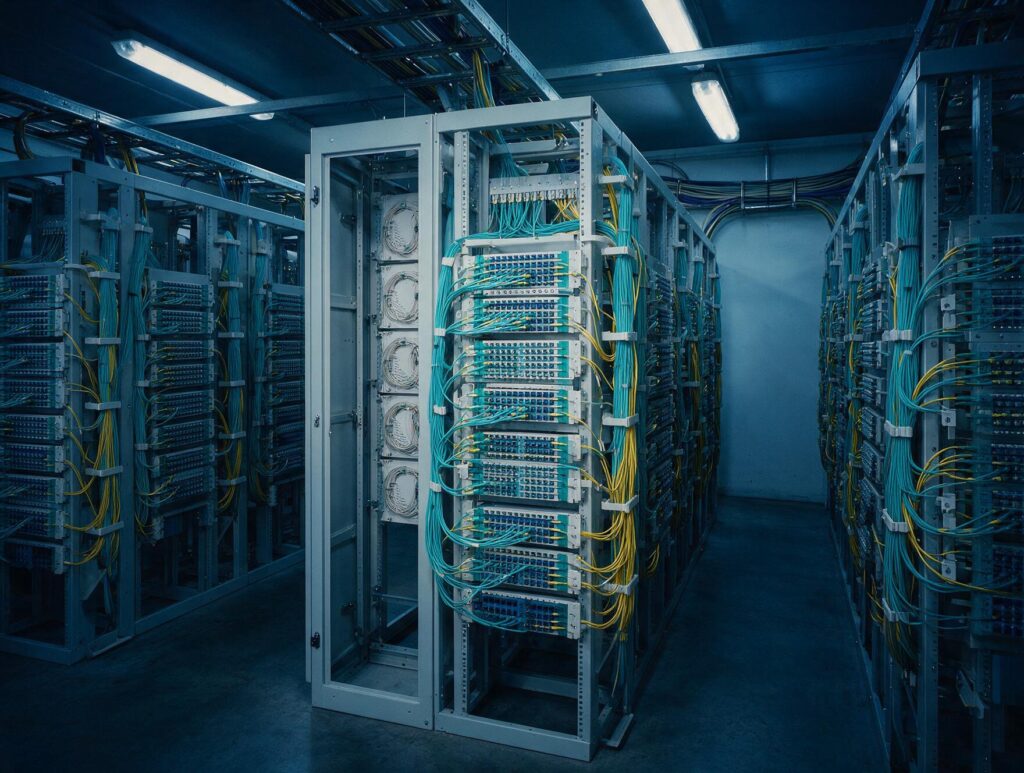
Full active and passive scope

From Nokia DWDM transmission on the backbone to fibre boxes, connectors, clamps and drop cables on the access layer.

Maintained, not just delivered

Outside plant and last mile maintenance, fault troubleshooting and round-the-clock NOC dispatch keep the network available long after handover.

How a network gets built

Five stages, from the map to the light

A fibre project is not one job, it is five. Each stage has its own deliverable, its own acceptance criteria, and its own way of going wrong. We carry all five, which is why nothing falls between them.

Survey and qualification
HLD and LLD design
Outside plant build
Splicing and connection
Testing and handover
View all services in 3D

Survey and qualification

Before a single metre is designed we walk the route. Pole survey, duct condition, city vectorization and market qualification tell us what is actually there rather than what the record says.
  • Pole and duct survey
  • City vectorization
  • Market qualification

HLD and LLD design

High level design fixes the topology and the budget. Low level design fixes every splice point, every closure, every metre of slack. The second one is where projects are won or lost.
  • Topology and capacity
  • Splice and closure plan
  • Bill of materials

Outside plant build

Trenching, ducting, aerial lashing and chamber works, executed by our own crews. Backbone, metro and last mile use the same standard of workmanship.
  • Trenching and ducting
  • Aerial and pole works
  • Chambers and closures

Splicing and connection

Fusion splicing across backbone, distribution and drop. FTTH customer installation, CPE and ONT commissioning, right through to the socket on the wall.
  • Backbone and drop splicing
  • FTTH customer install
  • CPE and ONT setup

Testing and handover

OTDR traces, power budget verification and end-to-end commissioning. You receive an as-built record that matches the network we actually left behind.
  • OTDR and power budget
  • End-to-end commissioning
  • As-built documentation
Layer one · Backbone and metro

Long haul and city rings

Backbone and metro fibre construction, with the materials to match: aerial, underground and drop cables, clamps, brackets and fixations, and NOKIA active material for DWDM and transmission where the route needs it.

Design services cover both high level and low level design, so the route you approve is the route that gets built.
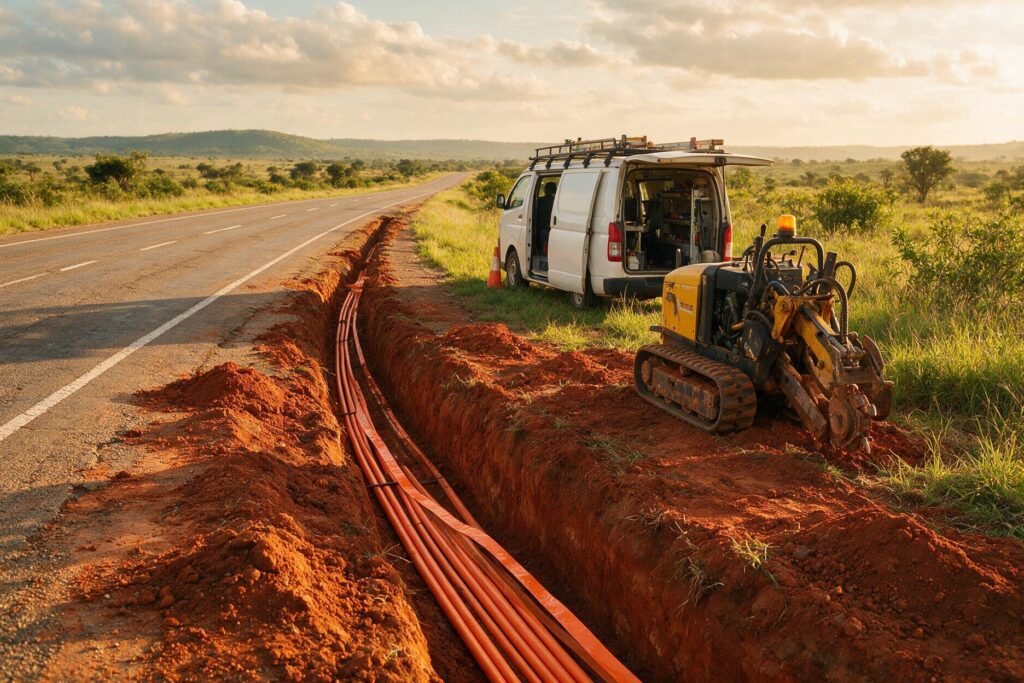
Underground fibre duct trenching along a rural highway
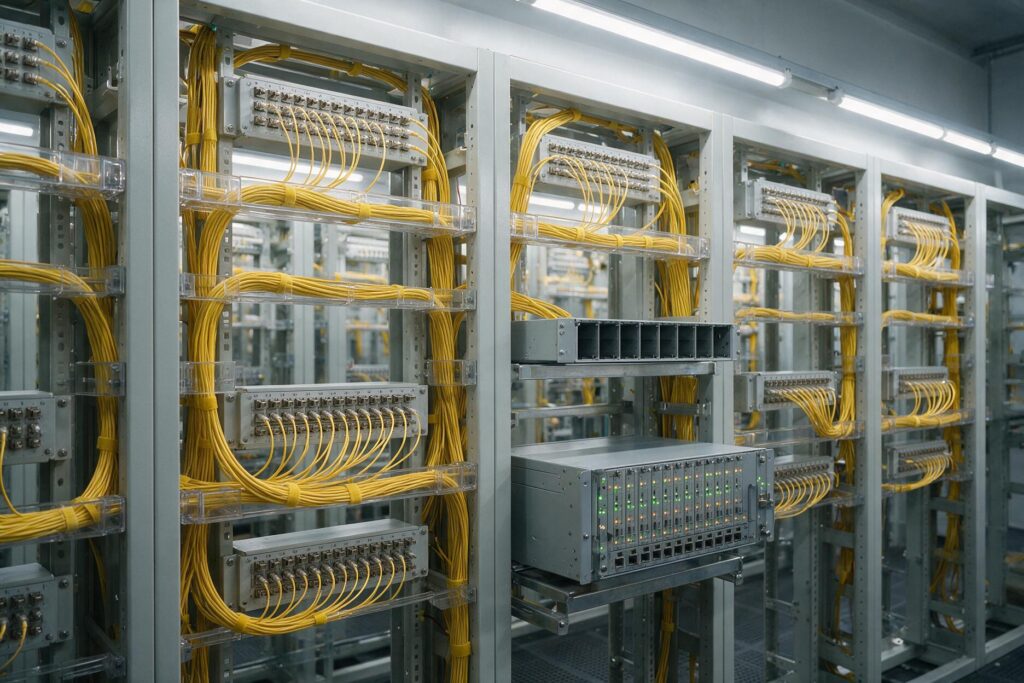
Optical distribution frame with single-mode patch cords
Layer two · Access and FTTx

From the OLT to the ONU

Complete FTTH and FTTx solutions, active and passive, from the OLT in the central office to the ONU in the customer premises. Fibre boxes, connectors and accessories, and the optical distribution frames that keep an access network maintainable five years later.

Outside plant construction and last mile installation are delivered by the same teams, under one contract.

Layer three · Splicing and test

Where the loss budget is won

Splicing services, testing and commissioning, backed by our own tooling: fusion splicers, OTDRs and the consumables that go with them. Every link is traced and documented before it is handed over.

After sales support, fibre network troubleshooting and repairs, and last mile maintenance keep the loss budget where it was on day one.
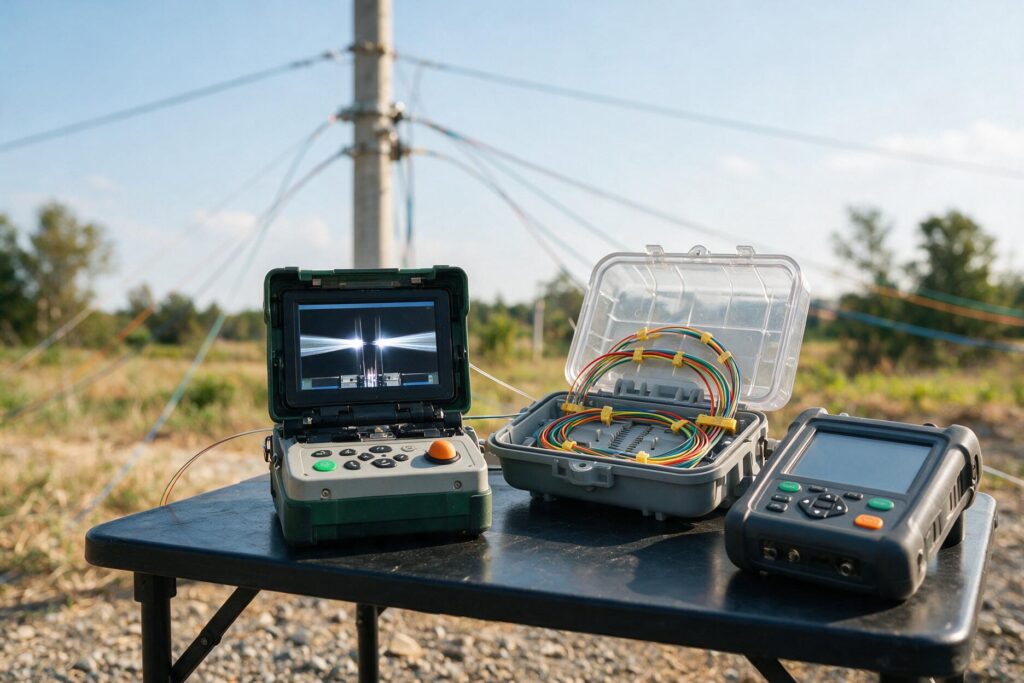
Fusion splicing a fibre optic cable in the field
Full scope of supply

Everything we design, build and operate on fibre

The complete fibre line from the NETIS catalogue. If it appears below, it is delivered by our own teams under a single contract.
Design and engineering
Design services covering high level design and low level design. Market qualification, pole survey and city vectorization. Route selection, capacity planning and splice point definition, delivered as a documented as-built package at handover.
Cables and passive materials
Aerial, underground and drop cables. Backbone and metro fibre materials. Fibre boxes, connectors and accessories. Hardware including clamps, brackets and fixations. Optical distribution frames and patch panels sized for the access network you are actually building.
Active equipment
FTTH and FTTx equipment and solutions, active and passive, from the OLT through to the ONU. NOKIA active material for DWDM and transmission. Central office integration and configuration.
Construction and installation
Backbone and metro fibre construction. Outside plant construction. Last mile installation and connection. FTTH customer installation including CPE and ONT. Splicing services across backbone, distribution and drop.
Tooling and testing
Fibre optic tools including fusion splicers, OTDRs and consumables, supplied and operated by our own crews. Testing and commissioning with OTDR traces and power budget verification on every link before handover.
Operations and maintenance
Maintenance and 24/7 NOC dispatch solutions for fibre. Outside plant maintenance. Last mile maintenance. Fibre network troubleshooting and repairs. After sales services, with spare parts and response times agreed before the network goes live.
After the build

A network is only as good as the day after handover

Construction ends. Operations do not. Our NOC dispatches on fibre faults every day of the year, with the field crews and the spare parts already in place.

24/7 NOC dispatch

Monitoring and dispatch for fibre networks, integrated with your existing operations dashboards rather than replacing them.

Troubleshooting and repair

Fault localisation by OTDR, emergency splicing and cable replacement, with response times agreed before the network goes live.

OSP maintenance

Preventive inspection of ducts, chambers, poles and closures, so that a route survives the roadworks that will eventually cross it.

Last mile maintenance

Drop cable and CPE support, the layer where subscribers actually experience the network and where churn is decided.
Questions we are always asked

Fibre rollout, in plain terms

Can you take a project from survey through to live subscribers?
Yes, and that is the normal case. Survey and qualification, high and low level design, outside plant construction, splicing, FTTH customer installation, testing and commissioning, then maintenance and NOC dispatch. One contract, one accountable team.
Aerial or underground — how do you decide?
The survey decides, not a preference. Existing pole infrastructure, duct availability and condition, road authority constraints and the expected life of the route all weigh in. Most real networks end up mixed, and the design has to handle the transitions cleanly.
What do you hand over at the end?
An as-built record that matches the network on the ground: route drawings, splice and closure schedules, OTDR traces and power budget results per link. If the documentation and the network disagree, the project is not finished.
Do you supply the active equipment as well?
We do. FTTH and FTTx equipment from the OLT to the ONU, and NOKIA active material for DWDM and transmission. Where you have already chosen a vendor, we integrate rather than argue.
How fast can last mile connections be delivered?
Once the distribution network is live, last mile connection becomes a volume operation. Throughput depends on crew count and on how clean the drop design is, which is exactly why low level design deserves the attention it gets.
What happens when a cable is cut?
The NOC localises the break by OTDR and dispatches. Emergency splicing restores service first, permanent repair follows. Response times are agreed in the maintenance contract before the network goes live, not negotiated during the outage.
Next step

Send us the route and we will tell you what it takes

A corridor on a map, an idea of the homes passed, and any duct or pole infrastructure you already control. That is enough for a first design and a build estimate.


Cart (0 items)

NETIS is a leader in the telecommunication and energy Industry, with over 17 years of experience in the design and development of high-performance network solutions.