

Solar PV · Commercial & Industrial

Solar power that pays for itself in five years

NETIS designs, finances, builds and maintains photovoltaic plants for industry, retail and logistics across Morocco and West Africa. Twenty-one megawatts installed, thirty-four gigawatt hours produced every year, and not one stage subcontracted.

0 MWc
Installed capacity
0 GWh
Produced every year
0
Plants delivered
0
Years to payback
Who builds it

The team that builds and keeps it running

NETIS Energies is the group’s solar arm, built on more than a decade of industrial photovoltaic experience in Morocco. Forty people across two sites, Casablanca and Tanger, covering study, engineering, installation and maintenance.

The commitment is simple: we subcontract nothing. From the electrical cabinets to the mounting structures, the panels, the inverters and the cabling, the same team is accountable for the plant throughout its twenty-five year life.

Rooftop solar PV array on an industrial building in Morocco
Where the panels go

Six ways to turn your surfaces into production

Sizing starts from a field audit: consumption profile, available surfaces, roof condition and geolocation. The implantation follows the site, never a catalogue.

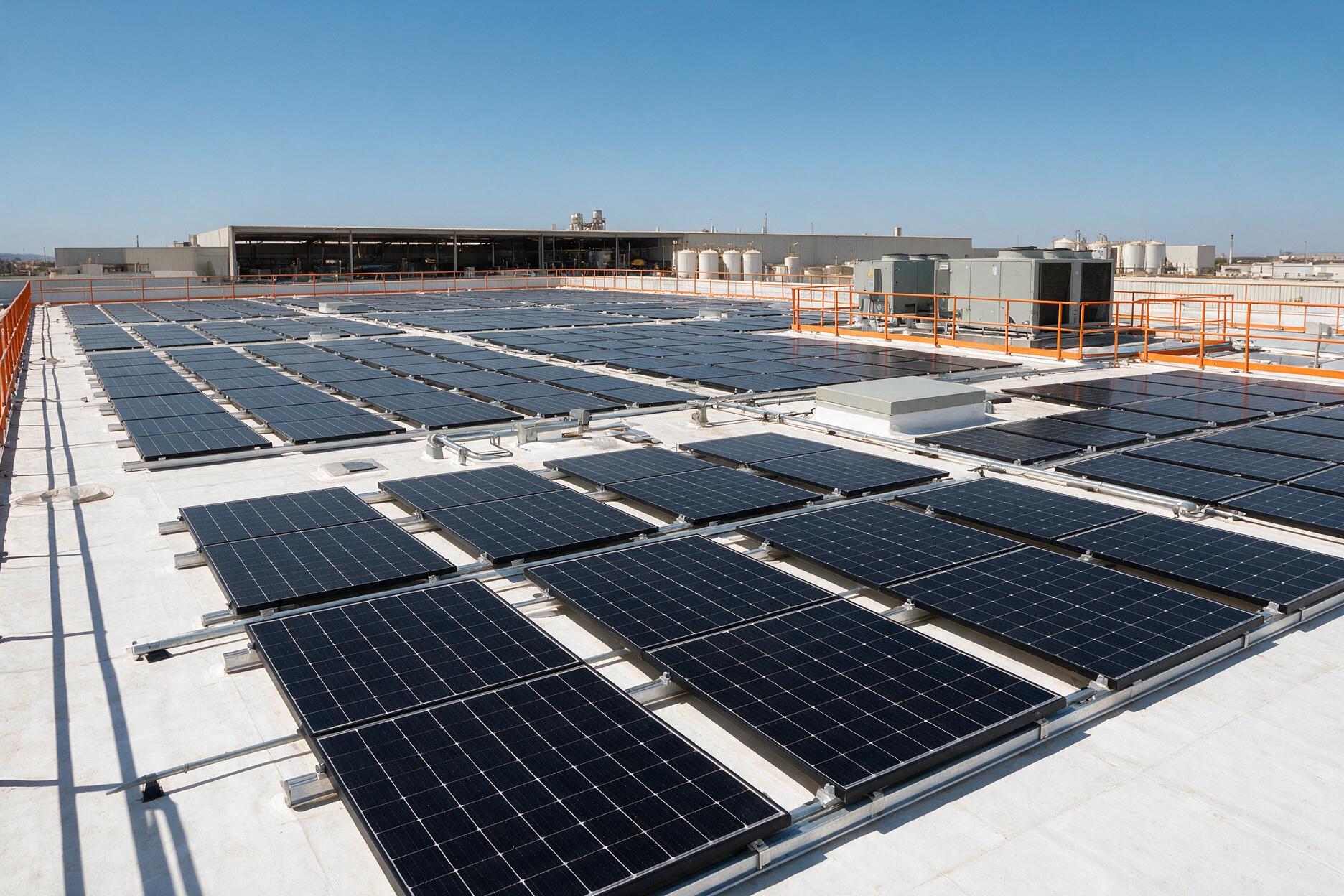
Rooftop solar PV array on an industrial building in Morocco

Rooftop

The most common route for factories and warehouses. Low-profile rails spread the load across the existing structure, with no penetration of the waterproofing membrane where the roof allows it.
  • Load and static calculation
  • Adapted to steel and concrete decks
  • No production land needed
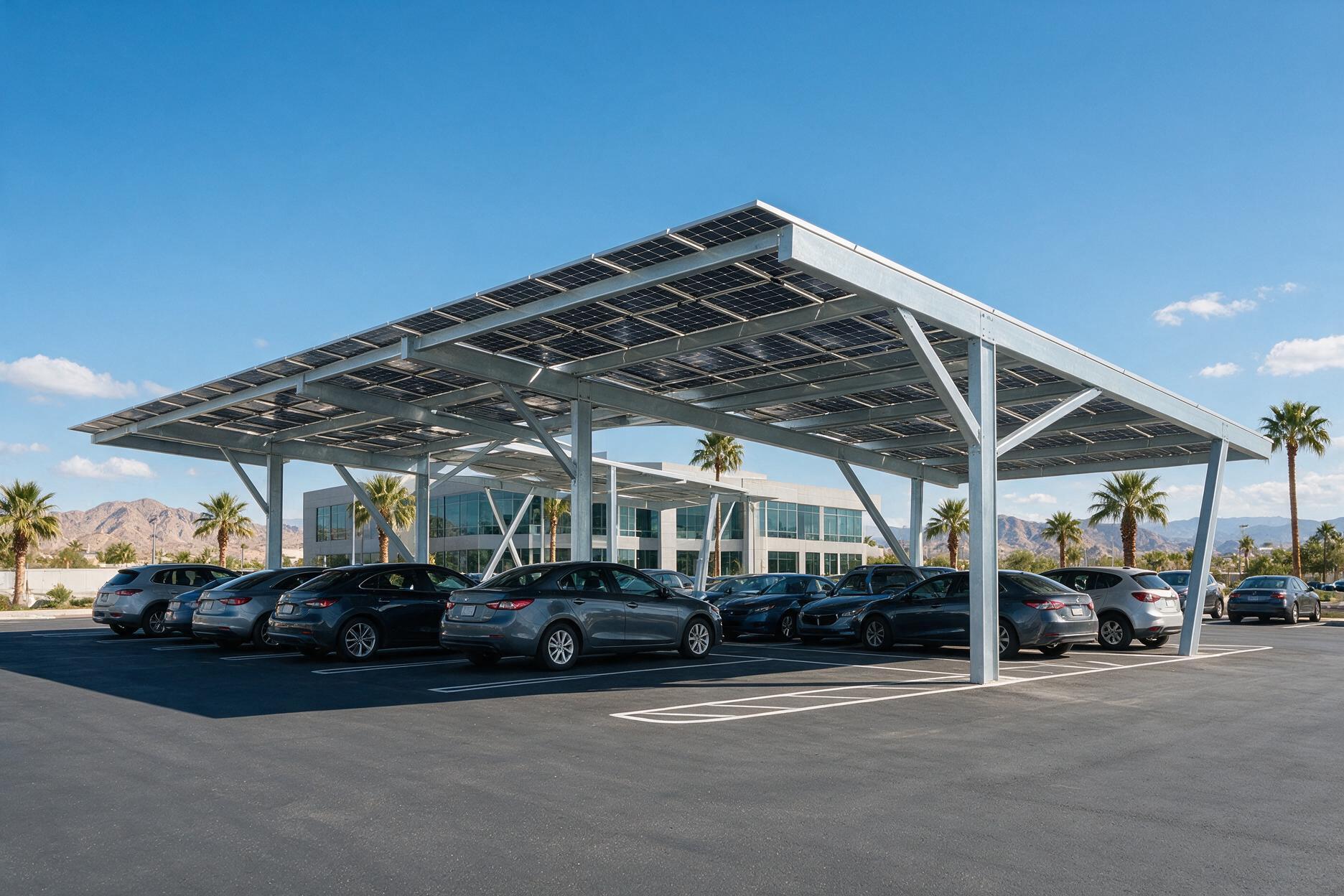
Solar carport canopy over a company parking lot

Parking canopy

Turns a car park into a generator and gives staff and visitors shaded parking. The natural place to add EV charging points.
  • Shaded parking
  • Ready for Wallbox charging
  • Visible commitment
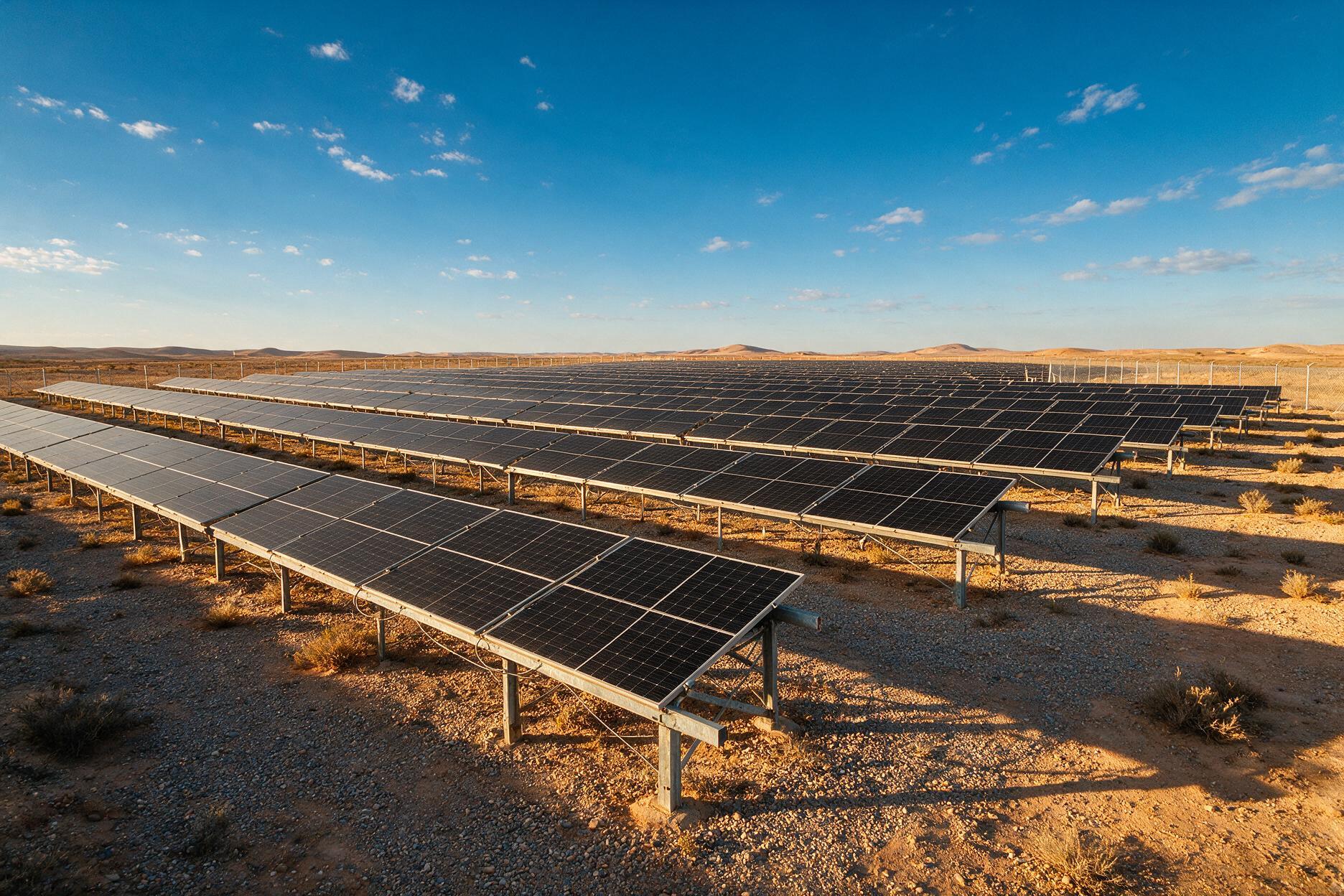
Ground-mounted solar plant on semi-arid terrain

Ground-mounted

For sites with unused land next to the plant. Galvanised steel tables, fixed tilt or trackers, sized on the land available.
  • Fixed tilt or trackers
  • Highest capacity per site
  • Perimeter and access works included
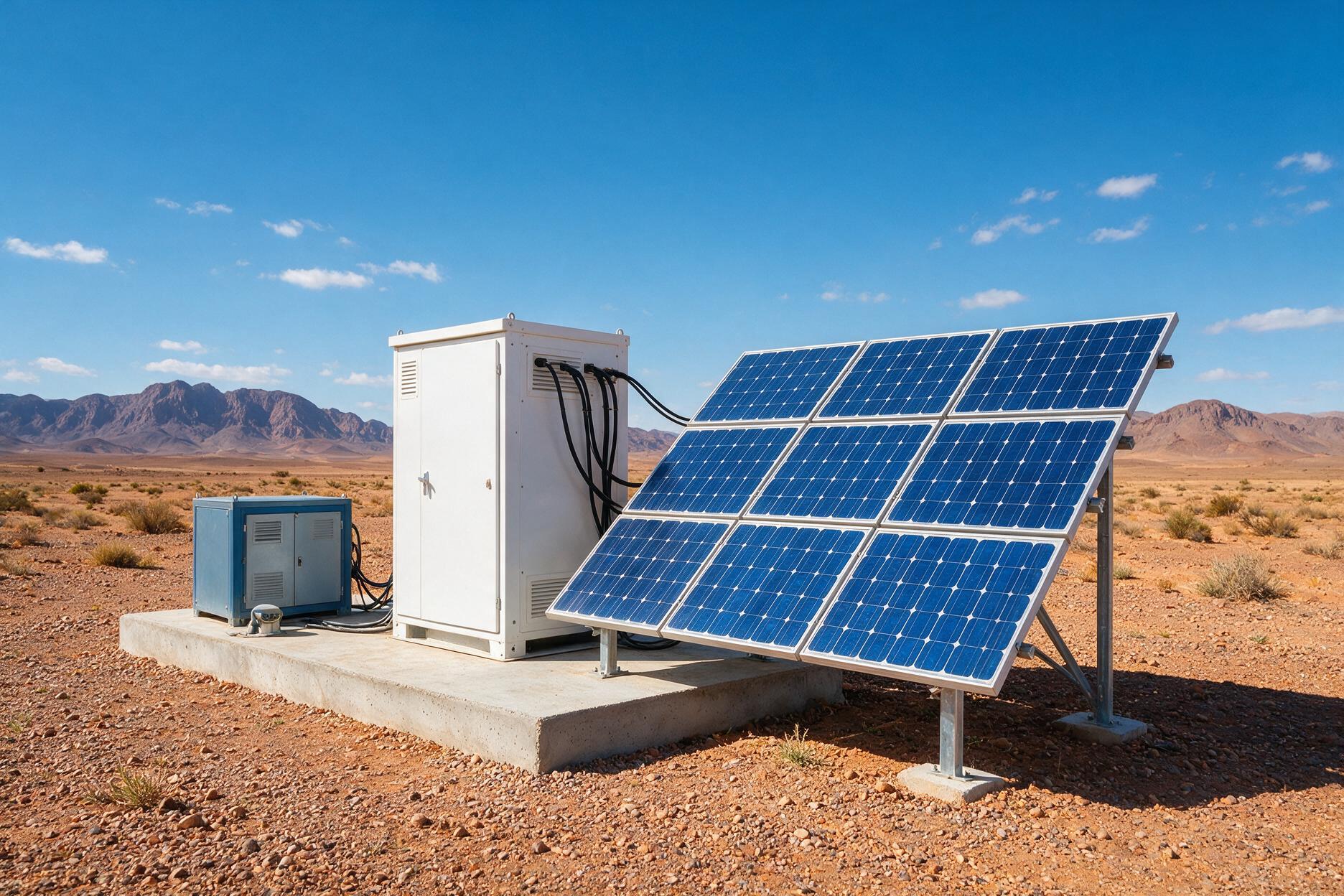
Off-grid solar hybrid installation with battery storage

Off-grid sites

Where the grid does not reach, or does not hold. Solar coupled with battery storage and a generator in reserve, sized for continuity rather than for the lowest kilowatt hour.
  • Solar plus storage plus genset
  • Sized for continuity
  • Remote supervision included
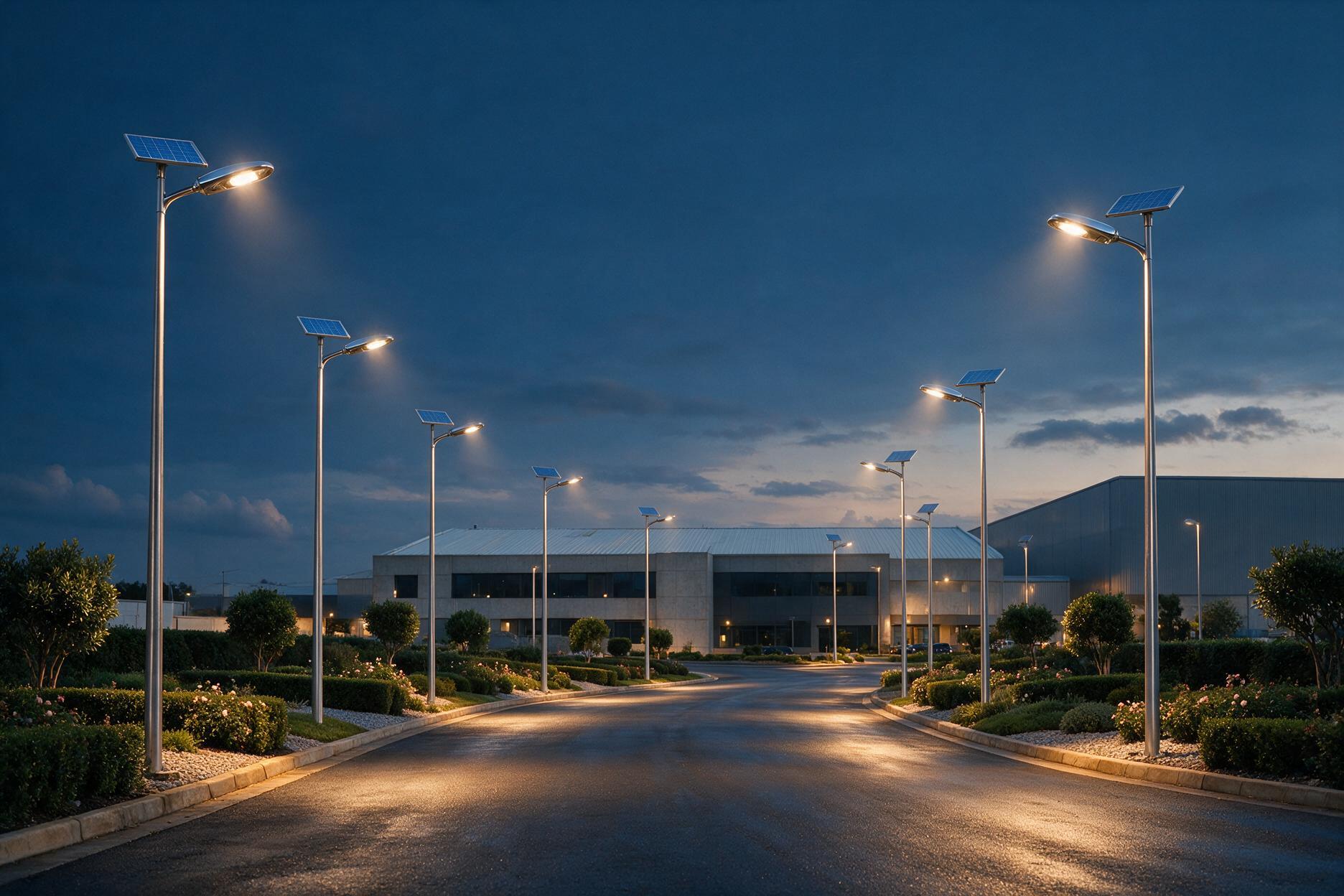
Solar-powered LED street lighting on a site access road

Solar lighting

Autonomous LED lighting for access roads, yards and car parks. Each pole carries its own panel and battery, so no trenching and no metered consumption.
  • No trenching, no cabling
  • Zero metered consumption
  • Deployed in days
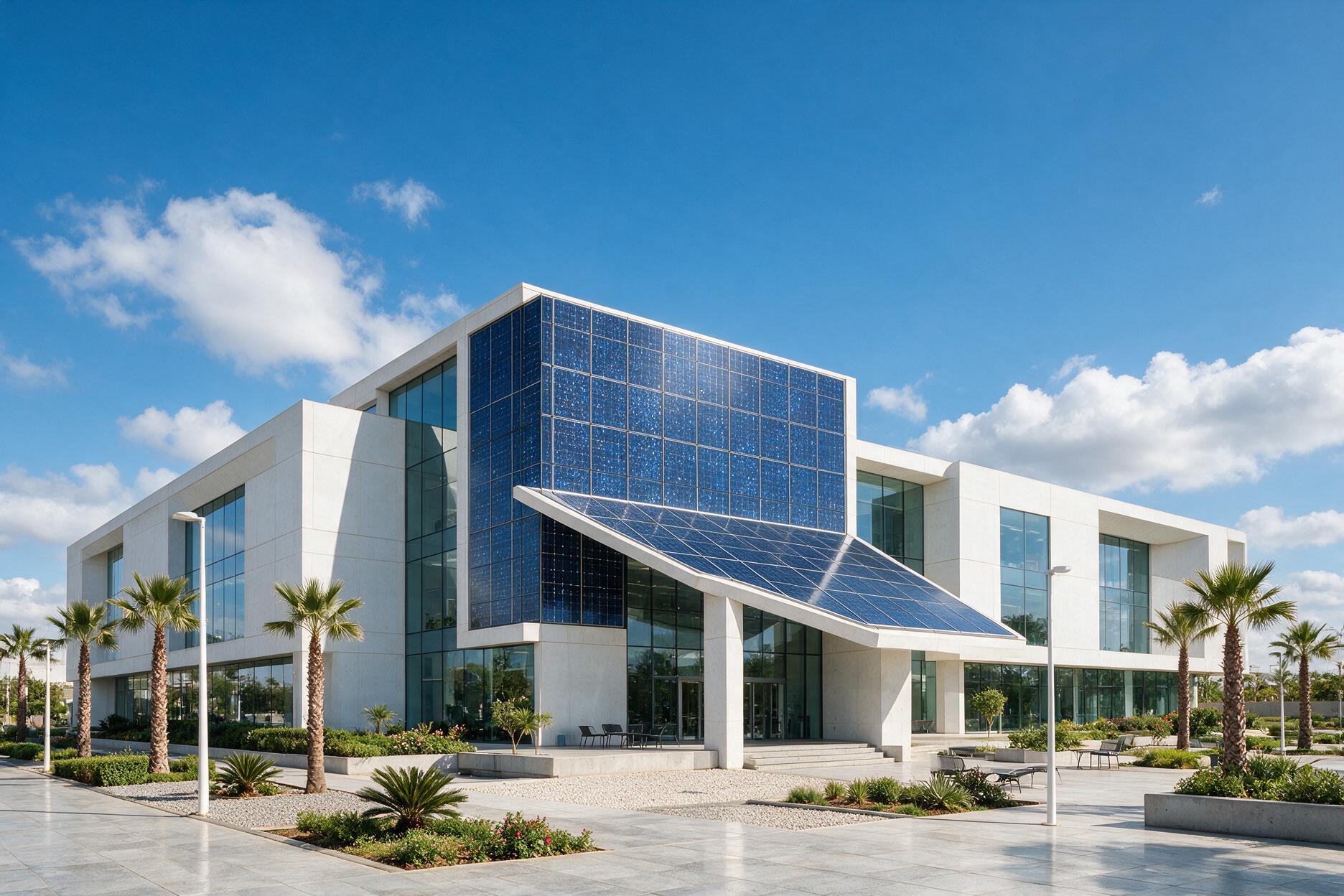
Building-integrated photovoltaic facade in Casablanca

Building-integrated

Photovoltaic glass built into the facade or the entrance canopy. Production becomes part of the architecture rather than something added to it.
  • Facade and canopy glazing
  • Architect-led integration
  • Counts toward building certification
Turnkey, end to end

Three stages, one contact

A study you can challenge, a financing route that fits how you want to own the asset, and an installation carried out by our own teams.

01 · Tailored study

Sizing built on a field audit: consumption profile, available surfaces and their type, geolocation. You receive a costed and argued study covering the support structure design, the static calculation of horizontal and vertical loads, the expected yield and the price per kilowatt hour.

02 · Financing

If you buy the plant, we support the grant and subsidy applications with our partner bodies. If you would rather not commit capital, a third-party investor funds it and you sign an electricity supply contract instead.

03 · Supply and installation

Nothing is subcontracted, from assembling the electrical cabinets to installing the structures, panels, inverters and cables. Equipment is selected for robustness, yield and warranty rather than for the lowest purchase price.
What we install

The equipment behind the yield

A plant performs according to orientation, irradiation and the skill of the installation team. It also performs according to what is bolted to the roof. These are the manufacturers we build with.

SunPower — photovoltaic panels
More than 13 GW delivered since 1985, ninety patents, and yields up to 22.6 percent. N-type silicon, robust copper tabs, and busbars routed behind the cell rather than across it.
Mounting structures
Structures designed and manufactured in Europe for photovoltaic use only, with more than a gigawatt equipped worldwide. Built from ArcelorMittal Magnélis steel and warranted twenty years against corrosion.
SMA, Huawei and GoodWe — inverters
Chosen per project against the application rather than by default, and always with the full set of certifications the site and the grid connection require.
SolarPlay® — supervision
Remote real-time monitoring of every plant we operate. On-site display of production and avoided CO2 keeps your teams engaged; any fault raises an alert so we intervene before you notice it.
Wallbox — EV charging
Smart charging points for electric vehicles, the natural extension of a solar carport. Award-winning hardware that turns surplus production into fuel for your fleet.
Storage and MV equipment
Lithium battery systems, transformers and medium-voltage gear sized alongside the array so that peak shaving and grid connection are designed together, not bolted on afterwards.
Full scope of supply

Everything we design, supply and operate

The complete solar line from the NETIS catalogue. If it is on this list, it is delivered by our own teams under a single contract.

Engineering and design
Solar modules and structures
Inverters, storage and control
EPC and construction
Monitoring and supervision
Operations and maintenance
View all services in 3D

Engineering and design

Field audit and consumption profiling. Sizing of the array against the load curve. Support structure design and static calculation of horizontal and vertical loads. Yield modelling and price per kilowatt hour. Grid connection studies and permitting support.

Solar modules and structures

Solar PV modules and panels. Mounting structures and trackers for roof, ground and parking canopy. Cables and full electrical bill of materials for solar. Transformers and medium-voltage equipment for solar plants.

Inverters, storage and control

Solar inverters. BESS and 48V battery systems for storage where applicable. 48V batteries for solar and energy storage use. Rectifiers, converters and inverters. Smart controllers and sensors for energy systems.

EPC and construction

Solar EPC projects for commercial and industrial sites. Solar farms EPC. Solar-hybrid microgrid EPC. Mini-grid turnkey projects. Electrical distribution systems and EV charging solutions.

Monitoring and supervision

Solar plant monitoring through SCADA and RMS. Full RMS platforms for solar plants. Integration with your existing energy operations and maintenance dashboards.

Operations and maintenance

Solar managed services. Preventive and corrective maintenance for commercial and industrial plants. Module cleaning schedules matched to local soiling. Spare parts management and performance reporting against the guaranteed yield.
Questions we are always asked

Solar PV, in plain terms

How long before a solar plant pays for itself?
Around five years for a well-designed and properly maintained plant, against a service life of twenty-five years. The remaining twenty years produce electricity at close to zero marginal cost. The exact figure depends on your tariff, your consumption profile and how much of the production you self-consume.
Do we have to buy the plant?
No. Two routes exist. You invest and we support the grant and subsidy applications with our partner bodies. Or a third-party investor funds the plant and you sign an electricity supply contract, paying only for the kilowatt hours delivered.
What happens to production we do not consume?
Under self-consumption the electricity is produced and used directly on site, which cuts the bill immediately. Surplus can be stored, used to charge vehicles, or exported where the regulatory framework allows it.
Will the roof take the load?
That is exactly what the static calculation in the study answers. We compute horizontal and vertical loads against the existing structure and adapt the mounting system to the deck type. Where the roof cannot take it, a ground or canopy implantation is proposed instead.
Who maintains the plant once it is running?
We do. Every plant is supervised remotely and in real time through SolarPlay®. A fault raises an alert, which is what allows us to intervene quickly rather than waiting for you to notice a drop in production.
How much of my bill can solar actually cover?
It depends on how well your consumption curve matches the sun. A daytime industrial load with cold storage or air conditioning can cover a very high share. A three-shift operation covers less from solar alone and usually needs storage to reach the same result.
Next step

Send us twelve months of bills and a satellite view

That is enough to return a sized array, an expected annual production figure and an indicative price per kilowatt hour. No site visit needed for the first estimate.

Cart (0 items)

NETIS is a leader in the telecommunication and energy Industry, with over 17 years of experience in the design and development of high-performance network solutions.